
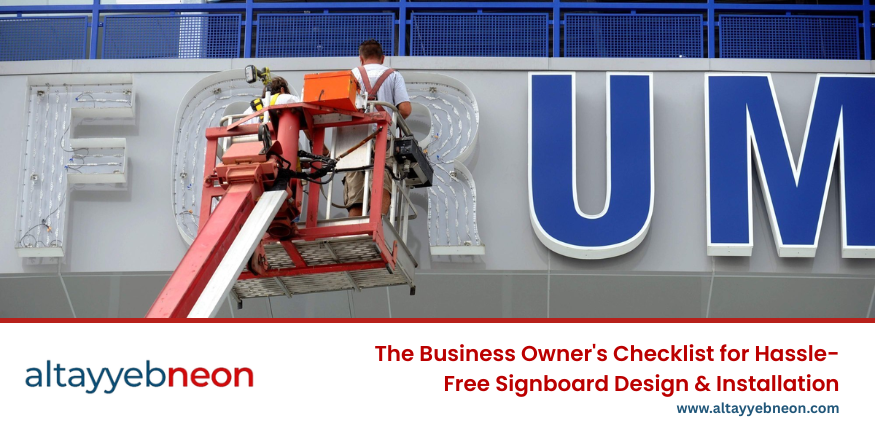
A signboard is more than just a display of your business name, it is one of the first things customers notice about your brand. Whether installed outside a retail store, on a commercial building, or inside a corporate office, quality signage creates a strong first impression and reinforces your business identity.
A professionally designed company signboard works around the clock, attracting attention, building credibility, and helping customers find your location with ease. However, achieving effective signage requires more than an attractive design.
From selecting the right materials and choosing suitable lighting to expert fabrication, installation, and ongoing maintenance, every stage plays a crucial role in its success.
This comprehensive checklist will help business owners make informed decisions, avoid costly mistakes, and ensure their signage delivers long-term value while supporting brand visibility, customer confidence, and business growth.
Phase 1: Define the Purpose Before Designing the Sign
One of the biggest mistakes businesses make is jumping straight into the design process before clearly defining what the sign is expected to achieve.
Different businesses require different signage objectives. A luxury jewellery boutique needs signage that communicates sophistication, while a warehouse facility prioritises visibility and wayfinding. Understanding these objectives from the beginning helps every design decision align with your business goals.
Ask yourself:
- Do you want to increase walk-in traffic?
- Is brand recognition your primary objective?
- Will the sign direct customers around your premises?
- Does the sign need to be visible day and night?
- Is it designed for long-term branding or short-term promotion?
Clarifying these objectives allows the design process to focus on functionality rather than aesthetics alone.
Phase 2: Evaluate the Installation Location
Every location presents unique challenges. A sign that performs well inside an office may not withstand harsh outdoor weather conditions.
Before beginning the business signboard design, carefully assess the installation environment.
Consider Visibility
Your sign should be visible from the distance at which customers first approach your business.
Evaluate factors including:
- Vehicle traffic speed
- Pedestrian movement
- Viewing angles
- Nearby buildings
- Trees or landscaping
- Existing neighbouring signage
The goal is to ensure customers notice your business quickly without visual confusion.
Study Lighting Conditions
Natural sunlight changes throughout the day.
Morning, afternoon, and evening lighting all affect how colours and lettering appear. Businesses operating after dark should also consider illuminated signage to maximise visibility.
Evaluate Structural Requirements
Different buildings require different installation methods.
Professional installers assess:
- Wall materials
- Building structure
- Electrical access
- Wind exposure
- Mounting options
Planning these factors early prevents unnecessary installation complications later.
Phase 3: Build a Sign That Reflects Your Brand
A signboard should never feel disconnected from the rest of your business identity.
Your logo, typography, colours, and messaging should remain consistent across every customer touchpoint, from your website and social media to printed brochures and physical signage.
Successful business signboard design focuses on consistency rather than complexity.
Instead of adding excessive graphics or promotional text, prioritise:
- Clear company branding
- High-contrast colour combinations
- Professional typography
- Balanced spacing
- Simple messaging
Customers should recognise your business within seconds of seeing the sign.
Remember that the most effective signboards often communicate less information more clearly.
Phase 4: Choose the Right Type of Signboard
Every business has unique operational requirements, which means there is no single signage solution suitable for every location.
Choosing the right signboard depends on your industry, branding objectives, available space, and customer interaction.
Some of the most popular options include:
Ideal for increasing visibility and establishing a strong street presence.
Suitable for:
- Retail shops
- Commercial buildings
- Restaurants
- Warehouses
- Shopping centres
Reception signage reinforces professionalism while creating a welcoming environment for visitors, clients, and employees.
Common materials include:
- Acrylic
- Stainless steel
- Brushed aluminium
- Illuminated lettering
LED illumination improves visibility during evenings while creating a premium brand image.
Popular illumination styles include:
- Halo-lit letters
- Front-lit channel letters
- Edge-lit acrylic
- Backlit logo displays
Wayfinding signs improve customer experiences by helping visitors navigate larger premises efficiently.
They are commonly installed within:
- Hospitals
- Corporate offices
- Educational institutions
- Commercial developments
Phase 5: Selecting Materials That Last
The appearance of your sign is only as good as the materials used to manufacture it.
Dubai’s climate presents unique challenges, including prolonged sunlight, dust, humidity, and high temperatures.
Choosing durable materials significantly extends the lifespan of your signage while reducing future maintenance costs.
Premium materials commonly include:
Acrylic
Acrylic provides a clean, modern appearance while allowing excellent light diffusion for illuminated signage.
Ideal for:
- Reception signs
- Illuminated logos
- Interior branding
Stainless Steel
Perfect for businesses seeking premium corporate aesthetics.
Its advantages include:
- Corrosion resistance
- Elegant finish
- Long lifespan
- Minimal maintenance
Aluminium Composite Panels
Frequently used for external building signage due to their lightweight construction and excellent durability.
LED Components
Modern LED lighting consumes less energy while providing bright, consistent illumination throughout the sign’s lifespan.
Selecting premium materials ensures your signage maintains its professional appearance despite challenging environmental conditions.
Phase 6: Don’t Underestimate Professional Fabrication
Even outstanding design concepts can fail if manufacturing quality is compromised.
Precision fabrication determines whether your finished sign reflects craftsmanship or appears cheaply produced.
Professional manufacturers carefully consider:
- Material accuracy
- Precision cutting
- Clean finishing
- Structural integrity
- Lighting consistency
- Paint quality
These details directly affect how customers perceive your business.
Poor fabrication often results in:
- Uneven lettering
- Visible joins
- Colour inconsistencies
- Lighting hotspots
- Reduced durability
Working with experienced signage professionals eliminates these issues while ensuring your investment continues representing your business effectively for years.
Phase 7: Why Corporate Signage Requires Long-Term Thinking
Many businesses approach signage as a one-time purchase rather than a long-term branding investment.
Professional corporate signage solutions are designed to support business growth over many years while maintaining consistent brand identity.
Instead of focusing solely on today’s requirements, consider future expansion.
Ask questions such as:
- Will additional locations require matching signage?
- Can interior branding follow the same design language?
- Will future office renovations affect existing signage?
- Can illuminated features be upgraded later?
Planning ahead creates greater consistency across every customer interaction while reducing future branding costs.
Professional corporate signage should support your business not only today but as your organisation continues to grow.
Phase 8: Plan for Professional Installation
The quality of your signage is only as good as its installation. Even a perfectly manufactured sign can lose its impact if it is poorly positioned, incorrectly mounted, or installed without considering structural and environmental factors.
Professional office signboard installation ensures your signage is secure, aligned, and positioned for maximum visibility while complying with building requirements.
Before installation begins, experienced signage specialists evaluate:
- Mounting surfaces and structural integrity
- Electrical access for illuminated signage
- Safe installation methods
- Visibility from multiple angles
- Accessibility for future maintenance
Proper planning reduces installation delays and ensures the finished sign complements the building rather than appearing like an afterthought.
Phase 9: Ensure Every Detail Is Approved Before Production
One of the most expensive mistakes in signage projects is approving artwork without carefully reviewing every detail.
Before manufacturing begins, confirm:
Logo Accuracy
Ensure your logo matches your official brand guidelines, including colours, proportions, and spacing.
Business Information
Double-check:
- Company name
- Contact details
- Website address
- Trade name
- Taglines
Dimensions
Confirm the sign fits the approved installation space without affecting visibility.
Material Specifications
Review finishes, colours, lighting options, and fabrication details before production starts.
Taking time during this stage prevents costly revisions later.
Phase 10: Think Beyond Exterior Signage
Many businesses focus entirely on outdoor signage while overlooking the customer journey once visitors enter the premises.
A consistent branding experience should continue throughout the property.
Professional corporate signage often include:
- Reception signage
- Wayfinding systems
- Department identification
- Meeting room signs
- Wall graphics
- Window branding
- Safety signage
- Directory boards
When all branding elements follow the same design language, customers experience a cohesive and professional environment from entrance to exit.
Phase 11: Why Office Signboard Installation Should Never Be Rushed
Installing signage requires technical expertise, precision equipment, and strict safety procedures.
Professional office signboards provide advantages beyond appearance.
These include:
Structural Safety
Heavy signboards require appropriate anchor systems capable of supporting long-term loads.
Electrical Safety
Illuminated signage requires professionally managed electrical connections that comply with safety standards.
Precise Alignment
Even minor alignment issues become highly visible on large commercial buildings.
Clean Finishing
Professional installers concealed fixings and electrical components wherever possible to create a premium appearance.
Long-Term Reliability
Correct installation minimises future repairs while extending the lifespan of the signage.
Businesses investing in premium signage should always treat installation as an essential part of the overall project rather than a final step.
Phase 12: Establish a Signage Maintenance Plan
Like every long-term business investment, signage requires regular maintenance to maintain its appearance and functionality.
Routine inspections help identify small issues before they become expensive repairs.
Maintenance should include:
- Cleaning acrylic and metal surfaces
- Removing accumulated dust
- Inspecting LED illumination
- Tightening mounting hardware
- Checking electrical components
- Inspecting weather seals
Routine servicing keeps your signage looking professional while preserving its structural integrity.
Avoid the Most Common Signage Mistakes
Many businesses unknowingly reduce the effectiveness of their signage by making avoidable decisions during planning and production.
Common mistakes include:
Choosing Price Over Quality
Lower-cost materials often deteriorate quickly, requiring replacement much sooner than premium alternatives.
Using Too Much Information
Large amounts of text reduce readability.
Your sign should communicate your business clearly within seconds.
Poor Colour Contrast
Low-contrast colour combinations reduce visibility during daylight and evening conditions.
Ignoring Viewing Distance
Letter sizing should always correspond with the expected viewing distance.
Inconsistent Branding
Different colours, fonts, or logos across various signage create confusion and weaken brand recognition.
Avoiding these mistakes protects your investment while improving customer perception.
Build a Complete Brand Experience
Modern businesses benefit most when signage forms part of a broader branding strategy rather than existing as an isolated marketing asset.
An integrated signage programme creates consistency across every customer touchpoint.
This may include:
- Outdoor building signage
- Reception branding
- Illuminated logos
- Wayfinding systems
- Wall graphics
- Frosted glass graphics
- Vehicle branding
- Hoarding graphics
- Digital printing
- Exhibition signage
Working with one experienced provider ensures every branding element shares the same colours, materials, typography, and quality standards.
Professional corporate signage solutions help businesses maintain consistency across multiple locations while strengthening customer recognition.
Why Choosing the Right Signage Partner Matters
Designing and installing commercial signage involves much more than manufacturing a display. It requires creative expertise, technical knowledge, precision fabrication, and experienced project management.
A trusted signage partner should provide:
- Consultation and planning
- Custom design services
- Material recommendations
- Precision fabrication
- Professional installation
- Ongoing maintenance support
Working with a single provider ensures better communication, faster project delivery, and consistent quality from concept through completion.
Build a Stronger Brand with Al Tayyeb Neon
A professionally crafted company signboard is one of the most valuable branding investments a business can make. From strategic planning and business signboard design to premium materials and expert office signboard installation, every stage contributes to creating signage that attracts attention, strengthens brand recognition, and supports long-term business growth.
At Al Tayyeb Neon, we specialise in delivering customised corporate signage solutions that combine innovative design, quality craftsmanship, and professional installation.
Whether you require illuminated building signage, reception displays, acrylic lettering, wayfinding systems, or complete branding solutions, our experienced team manages every stage with precision and attention to detail.
Looking for reliable signboard design and installation in Dubai? Speak with the experts at Al Tayyeb Neon today. From concept and fabrication to installation and maintenance, we deliver complete signage solutions that help your business stand out with confidence.
Frequently Asked Questions
- Why is a professionally designed company signboard important?
A company signboard improves brand visibility, creates a strong first impression, and helps customers easily identify and remember your business.
- What should I consider when planning a business signboard?
A successful business signboard design should consider branding, readability, materials, visibility, lighting, and installation location to maximise effectiveness.
- Why should businesses invest in corporate signage?
Professional corporate signage solutions create consistent branding, improve customer experience, strengthen business identity, and support long-term marketing objectives.
- How long does office signboard installation usually take?
Most signboard installation projects are completed within a few hours to several days, depending on the sign’s size, complexity, and installation requirements.