
Dubai Signage Permits: Approval Requirements for Shop Signs, Building Signs & LED Displays
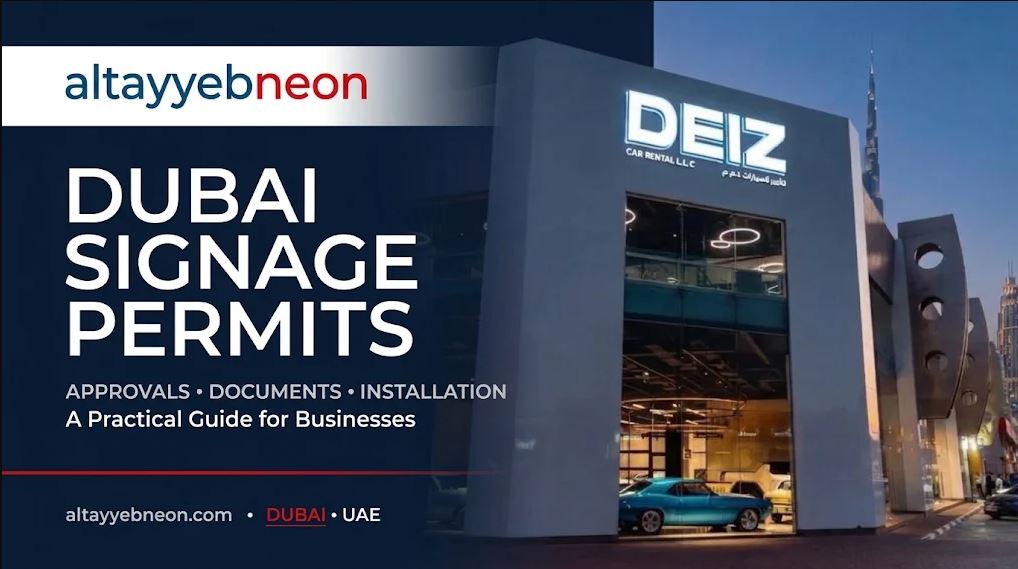
Planning to install a new shop sign, illuminated business signboard or commercial building signage in Dubai? Before starting fabrication or installation, it is important to understand the applicable signage approval requirements.
Signage is an essential part of business branding, but installing a sign is not simply a matter of choosing a design and fixing it to a building. Depending on the location, property type, signage format and advertising purpose, approvals or permits may be required from the relevant authority.
For retailers, restaurants, offices, property developers and commercial establishments, understanding the approval process can help avoid unnecessary delays, redesign work and installation complications.
In this guide, Al Tayyeb Neon explains the key considerations businesses should understand before arranging signage installation in Dubai.
Why Are Signage Approvals Important in Dubai?
Dubai has regulations governing outdoor advertising and signage to maintain the city’s appearance, protect public safety and ensure advertisements are displayed in appropriate locations.
Under Dubai Decree No. 6 of 2020, advertisements generally require a permit from the competent authority before being displayed. The responsible authority depends on the location and type of advertising.
This means that businesses should not assume that the same approval process applies to every shopfront, commercial building or outdoor advertising installation.
Planning approvals before fabrication helps ensure that the proposed signage is suitable for its intended location.
1. Which Authority Handles Signage Permits in Dubai?
The responsible authority can vary according to the property’s location and the type of signage.
Relevant authorities and jurisdictions include:
- Dubai Municipality for applicable advertising locations under its jurisdiction.
- Dubai Development Authority for advertising within its designated free-zone jurisdictions.
- Roads and Transport Authority for advertising within relevant road rights-of-way, public transport systems and associated locations.
- The relevant free-zone or development authority for signage within its managed jurisdiction.
- Other competent authorities where specific advertising formats or locations require their approval.
For commercial premises, the relevant authority should be identified before submitting a signage proposal.
Official reference: Dubai Decree No. 6 of 2020 regulating advertisements in the Emirate of Dubai.
2. What Documents May Be Required for a Signage Permit?
The documents depend on the location, signage category and authority.
For example, the Dubai Development Authority’s published advertising permit requirements include documents such as:
- Advertising permit application.
- Location map or site plan.
- Tenant or owner’s trade licence.
- Photograph of the existing building façade or proposed installation location.
- Coloured, scaled drawings of the proposed signage.
- Sign dimensions, cross-sections and material specifications.
- Perspective mock-up showing the proposed sign on the building.
- Property owner or plot owner NOC, where applicable.
- Contractor appointment documentation, where required.
- Structural drawings and calculations, where applicable.
- Risk assessment and method statement for certain electrical or elevated signage installations.
Not every project requires every document. Requirements should be confirmed with the competent authority before submission.
3. Do Shopfront Signs Require Approval?
Shopfront signage is an important part of retail branding in Dubai.
Businesses installing a new shop sign, replacing an existing sign or changing their external signage should check the applicable requirements for their building and location.
Common shopfront signage options include:
- Illuminated acrylic signs.
- 3D channel letter signage.
- LED backlit letters.
- Aluminium composite panel signboards.
- Stainless steel lettering.
- Custom logo and fascia signage.
Before manufacturing a shop sign, businesses should confirm the permitted dimensions, positioning, design requirements and any necessary landlord or authority approvals.
4. What About Building and Rooftop Signage?
Building façade signs and rooftop signage involve additional technical considerations.
Depending on the installation, the approval process may require a review of:
- Sign dimensions and overall weight.
- Building façade and structural conditions.
- Mounting systems and support structures.
- Wind-loading and structural calculations, where applicable.
- Electrical components and illumination.
- Installation access and safety arrangements.
- Property owner and relevant authority permissions.
Large illuminated signs should be professionally designed and engineered for their specific installation environment.
5. Are LED and Illuminated Signs Subject to Additional Requirements?
Illuminated signage requires consideration of both its visual design and technical installation.
LED channel letters, backlit signs, lightboxes and digital displays may require additional information about their electrical and structural arrangements.
Depending on the project, this can include:
- Lighting specifications.
- Electrical installation details.
- Mounting and support information.
- Risk assessments.
- Safe access and installation arrangements.
- Relevant technical drawings.
Businesses should also consider brightness, readability and the surrounding environment when selecting illuminated signage.
6. Common Mistakes to Avoid Before Installing Business Signage
Businesses can experience unnecessary delays when signage planning begins without checking the approval requirements.
Avoid these common mistakes:
Manufacturing Before Approval
Producing a sign before confirming the approved design and dimensions may result in expensive modifications.
Incorrect Signage Measurements
Incorrect dimensions can create problems during the approval process and installation.
Ignoring Property Owner Requirements
Commercial buildings and shopping centres may have their own signage guidelines and approval procedures.
Choosing Unsuitable Materials
The selected materials should suit the installation environment, structural requirements and intended appearance.
Overlooking Installation Safety
Large, elevated and illuminated signs require appropriate technical planning and safe installation procedures.
Assuming Every Dubai Location Has the Same Rules
Different jurisdictions can have different application procedures and requirements. Always verify the rules that apply to your specific location.
7. How Al Tayyeb Neon Helps with Signage Projects in Dubai
Al Tayyeb Neon provides signage design, fabrication, manufacturing and installation services for businesses across Dubai and the UAE.
With more than 39 years of signage industry experience, the company supports projects ranging from individual shopfront signs to large commercial and building signage installations.
Our services include:
- Custom shopfront and outdoor signage.
- 3D illuminated letters and building signs.
- Acrylic and stainless steel signage.
- LED and neon signage.
- Commercial and corporate branding.
- Signage installation and maintenance.
- Project planning and approval-related guidance.
Our team considers the proposed signage design, materials, dimensions and installation requirements to help clients plan their projects effectively.
Whether you are opening a new retail outlet, upgrading your office branding or planning a larger commercial signage project, professional planning can make the process more straightforward.
8. Frequently Asked Questions About Signage Permits in Dubai
Do I need permission to install a shop sign in Dubai?
Requirements depend on the property’s location, signage type and applicable authority rules. Businesses should confirm the necessary approvals before installation.
Who issues outdoor signage permits in Dubai?
The responsible authority depends on the advertising location and jurisdiction. Dubai Municipality, RTA, Dubai Development Authority and other competent authorities may be involved in different circumstances.
What documents are needed for a signage application?
Depending on the project, documents may include a site plan, trade licence, existing façade photographs, scaled design drawings, material specifications, property owner NOC and structural documentation.
Can I install an LED signboard without approval?
Do not assume that illuminated signage is exempt. Check the applicable requirements with the relevant authority before fabrication and installation.
Can a signage company help with the approval process?
An experienced signage company can help prepare technical drawings, material specifications and project documentation and provide guidance on the approval process. Final approval remains the responsibility of the competent authority.
How long does a signage permit take?
Processing times depend on the authority, application type and completeness of the submitted documents. Check the current service timeline directly with the relevant authority.
Get Professional Signage Assistance in Dubai
Planning a new shopfront sign, LED display or commercial building sign?
Al Tayyeb Neon can help you plan a signage solution that reflects your brand, suits your premises and considers the relevant installation requirements.
Contact our team to discuss your project and request a signage consultation.
Al Tayyeb Neon – Professional Signage Solutions in Dubai
Website: https://altayyebneon.com/
Phone: +971 50 754 2009
Email: info@altayyebneon.com
Disclaimer: This article provides general information, not legal advice or a guarantee of approval. Signage requirements, fees and procedures can change and vary by jurisdiction. Always verify current requirements with the relevant authority before proceeding.